

What is Geocaching?
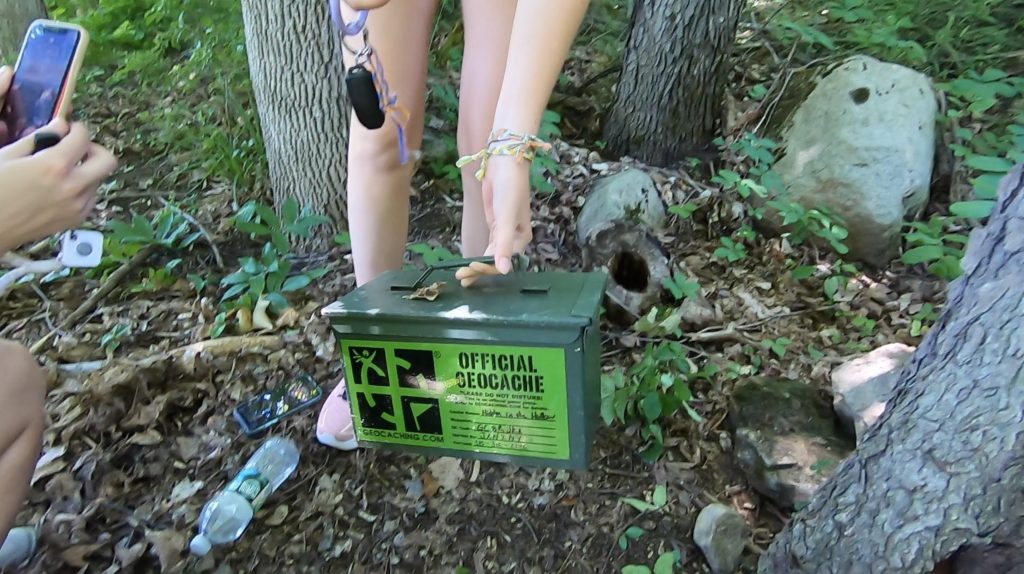
Think of geocaching as a real-world treasure hunt powered by GPS. People hide containers, called geocaches or caches, in outdoor locations and share their coordinates online for others to find.
Caches come in all shapes and sizes and can be hidden along trails, in parks, near landmarks, or in places you might otherwise pass right by. Using the Geocaching app or website, choose a cache, follow the coordinates, and then put your searching skills to work once you get close.
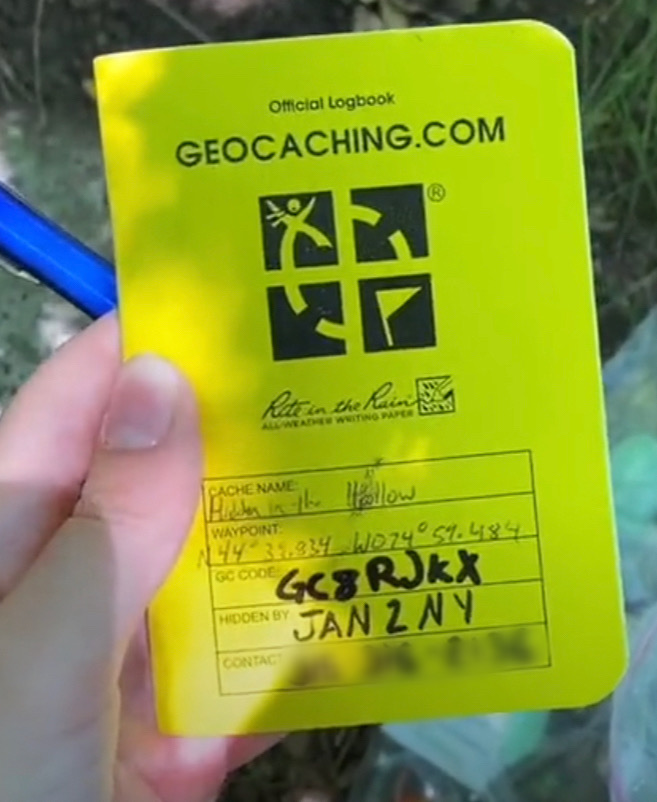
Inside, you’ll typically find a logbook to sign, and some caches also contain small treasures to trade. The best part? The hunt gives you another reason to get outside, explore somewhere new, and see what you can find along the way.
Start with STLCtrails.com
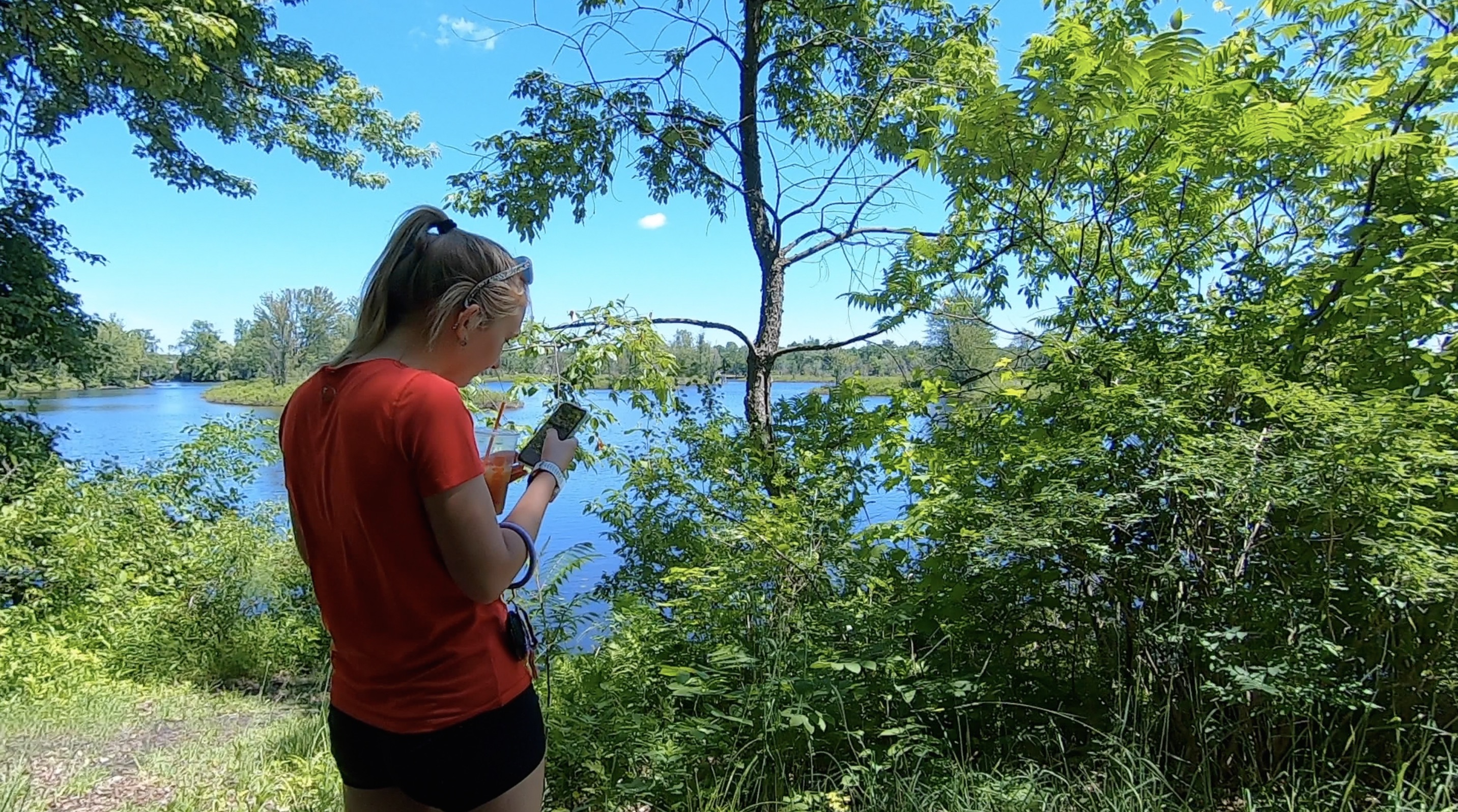
Not sure where to begin? Use the interactive trail maps on STLCtrails.com to find a trail and see what geocaches are waiting nearby.
Each trail page includes a “Nearby Geocaches” section in the right-hand column. Select the link to head to Geocaching.com. If you’re logged into a free Geocaching account, you’ll be taken directly to a map showing caches near the trail you were just viewing. If not, simply log in or create a free account, then return to the “Nearby Geocaches” link to start exploring.
Learn to Geocache
Ready to try it? Once you’ve picked a cache, the process is pretty simple: follow the coordinates, start searching, and see what you discover.
1. Follow the Coordinates
Open the Geocaching app and navigate toward your cache. Enjoy the trip there—half the fun is discovering trails, views, and places you might not have explored otherwise.
2. Start Hunting
GPS will get you close, but usually not right to the hiding spot. Once you’re within about 20 feet, start looking. Caches might be tucked into a tree, behind a rock, near the ground, or cleverly disguised. If you get stuck, check the cache listing for an optional hint.
3. Log Your Find
Found it? Open the cache carefully, sign the logbook, and record your find in the Geocaching app. Some larger caches also contain small treasures or trinkets to trade.
4. Trade Fairly
If you take an item, leave something of equal or greater value for the next geocacher. No trade with you? No problem—simply leave the treasures where they are.
5. Put It Back
Close the cache securely and return it exactly where you found it so the hunt is just as fun for the next person.
Then keep exploring—or check the map for your next find!
Must-Know Basics
- Download the Geocaching app (or find coordinates on geocaching.com)
- The app will tell you where to go - there is a GPS navigation feature embedded within
- All geocaches have a name and a description
- Once you get 20-30 feet near the cache, start looking with your hands and eyes
- Stay on or near the trail. Be careful not to harm vegetation or disrupt the natural area
- When you find the cache -- sign the log book and log your find on your profile
- If you brought a treasure to leave, you can take one to keep
- Difficulty Rating: How much of a mental test finding the cache will be on a scale of 1-5 (1=easy, 5=most difficult)
- Terrain Rating: How much physical excursion is required to find the cache on a scale of 1-5 (1=easy, 5=most difficult)
- Caches vary greatly in size (micro=smallest, large=largest, other=irregular shape)
- Always bring a pen for log books
- Geocaches will never be buried, but also won’t necessarily be on the ground
- For extra help during your search, check the ‘recent activity’ and ‘hint’ features